
Darren Saul • August 1, 2026
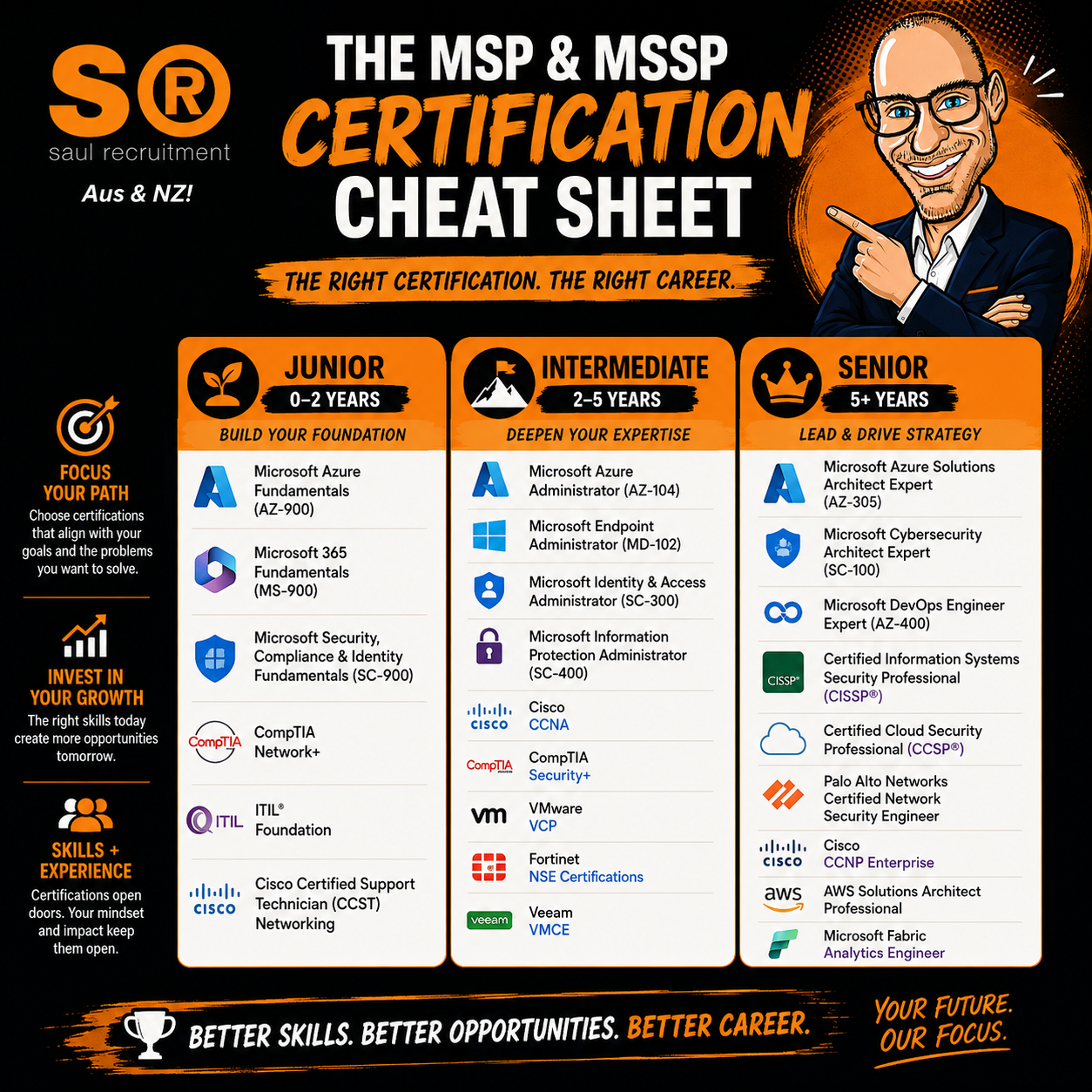
One of the questions I get asked most often by engineers is, "Which certification should I do next?"
The answer is usually the same.
It depends on where you are in your career.
Too many people collect certifications because they look impressive on LinkedIn. The best engineers use certifications to build practical skills that solve real business problems.
MSPs and MSSPs are evolving rapidly. Cloud, identity, automation, cybersecurity and AI are reshaping the services clients expect. The engineers who continue investing in the right skills will have the greatest opportunities over the next five years.
Here's where I believe your focus should be.
Junior Engineers (0–2 Years)
At this stage, the goal isn't to become an expert. It's to build a solid technical foundation while demonstrating that you're committed to learning.
Some of the most valuable certifications include:
- Microsoft Certified: Azure Fundamentals (AZ-900)
- Microsoft 365 Fundamentals (MS-900)
- Microsoft Security, Compliance & Identity Fundamentals (SC-900)
- CompTIA Network+
- ITIL Foundation
- Cisco Certified Support Technician (CCST) Networking
These certifications introduce cloud computing, networking, Microsoft technologies and IT service management. More importantly, they help junior engineers understand how modern MSPs operate.
Intermediate Engineers (2–5 Years)
This is where careers often accelerate.
Clients expect engineers to solve problems independently, deliver projects and provide technical advice. Certifications should now deepen technical capability rather than simply demonstrate awareness.
I'd recommend focusing on:
- Microsoft Azure Administrator (AZ-104)
- Microsoft Endpoint Administrator (MD-102)
- Microsoft Identity and Access Administrator (SC-300)
- Microsoft Information Protection Administrator (SC-400)
- Cisco CCNA
- CompTIA Security+
- VMware VCP
- Fortinet NSE certifications
- Veeam VMCE
These certifications align closely with what many MSPs and MSSPs are delivering every day, including Microsoft 365, Azure, networking, endpoint management, backup and cybersecurity.
Senior Engineers & Technical Leaders (5+ Years)
Senior engineers are expected to design solutions, mentor teams and advise clients strategically.
At this level, certifications should reflect architecture, security and leadership.
Some of the strongest options include:
- Microsoft Azure Solutions Architect Expert (AZ-305)
- Microsoft Cybersecurity Architect Expert (SC-100)
- Microsoft DevOps Engineer Expert (AZ-400)
- Certified Information Systems Security Professional (CISSP)
- Certified Cloud Security Professional (CCSP)
- Palo Alto Networks Certified Network Security Engineer
- Cisco CCNP Enterprise
- AWS Solutions Architect Professional
- Microsoft Fabric Analytics Engineer (where data projects are becoming part of managed services)
These certifications prepare engineers to lead complex cloud migrations, security transformations and strategic client engagements.
Don't Chase Every Badge
One mistake I see regularly is engineers collecting certifications that don't align with the work they actually want to do.
Instead, ask yourself:
- What problems do I want to solve?
- What projects do I want to lead?
- What role do I want in three years?
Your certification roadmap should support those answers.
The Skills That Matter Most
The best engineers I've placed don't always have all the certifications.
And my clients still fight over them.
They hire people who can communicate with customers, simplify complex technology, document their work, collaborate with teammates and genuinely enjoy solving problems.
Technical certifications might get you the interview.
Your attitude, curiosity and ability to deliver outcomes are what build a long-term career.
Invest in both, and you'll always be in demand.
Want more FREE content around building culture and hiring? 👉 https://jmp.sh/Blgq4f8A
Want more FREE content around career development and job seeking? 👉 https://jmp.sh/gla70YWp
Some great videos here as well 👉 https://www.youtube.com/playlist?list=PLWCIjFeFwvnmiULvInFNx2IkTuwtYxqsy